
Written By Dr Bjorn Thomas | Last Updated February 2026
Noticing a tender lump under the skin that suddenly becomes red, hot and painful can feel alarming. Many people discover a long-standing “spot” or small bump has suddenly flared up and worry that something serious is going on. In many cases, this is a “sebaceous cyst” that has become severely inflamed, imitating an infection, and while it is usually treatable, it does need proper medical attention.
This guide explains what sebaceous cysts are, how to recognise a flare, when to seek urgent help, and what safe, evidence-based treatments are available – including treatment of facial cysts where appearance and scarring are particular concerns.
It is important to note that what is typically described as a sebaceous cyst is a misnomer. These lesions are actually epidermoid cysts or epidermal inclusion cysts, and the use of the term “sebaceous” cyst is actually incorrect. Sebaceous cysts are a different entity.
Key Takeaways
- An epidermoid (sebaceous) cyst is a benign, slow-growing lump under the skin; when an epidermoid cyst is inflamed, it can become red, hot, swollen and very painful – rarely it is a true infection.
- Signs of infection include increasing pain, redness, heat, rapid swelling, pus discharge, fever, and feeling generally unwell – these symptoms should prompt medical review.
- Most epidermoid cysts do not fully disappear on their own; even if they “deflate”, the sac often remains and can refill or flare again.
- Squeezing, cutting, or treating a cyst at home can increase the risk of infection, cause scarring and delay diagnosis of more serious conditions.
- Safe treatment for an ‘infected’ cyst may involve incision and drainage, antibiotics when appropriate, followed later by complete surgical excision to prevent recurrence.
Jump to Section
- What Is an Epidermoid (Sebaceous) Cyst?
- Realising when an Epidermoid (Sebaceous) Cyst is Infected: What Changes When Infection Sets In?
- Worried About an Infected Cyst?
- How Can You Tell If a Cyst Is Infected?
- Fact or Myth: Sebaceous Cysts Go Away on Their Own
- When to Worry About an Epidermoid (Sebaceous) Cyst
- What Not to Do: Why Home “Remedies” Can Make Things Worse
- Safe Medical Treatments for an Infected Epidermoid (Sebaceous) Cyst
- Treatment for cysts on the face: Balancing Medical Safety and Appealing Appearance
- What to Expect Before, During and After Cyst Treatment
- Frequently Asked Questions About Inflamed Epidermoid Cysts
- Think You Need Help with an Inflamed Epidermoid Cyst?
What Is an Epidermoid (Sebaceous) Cyst?
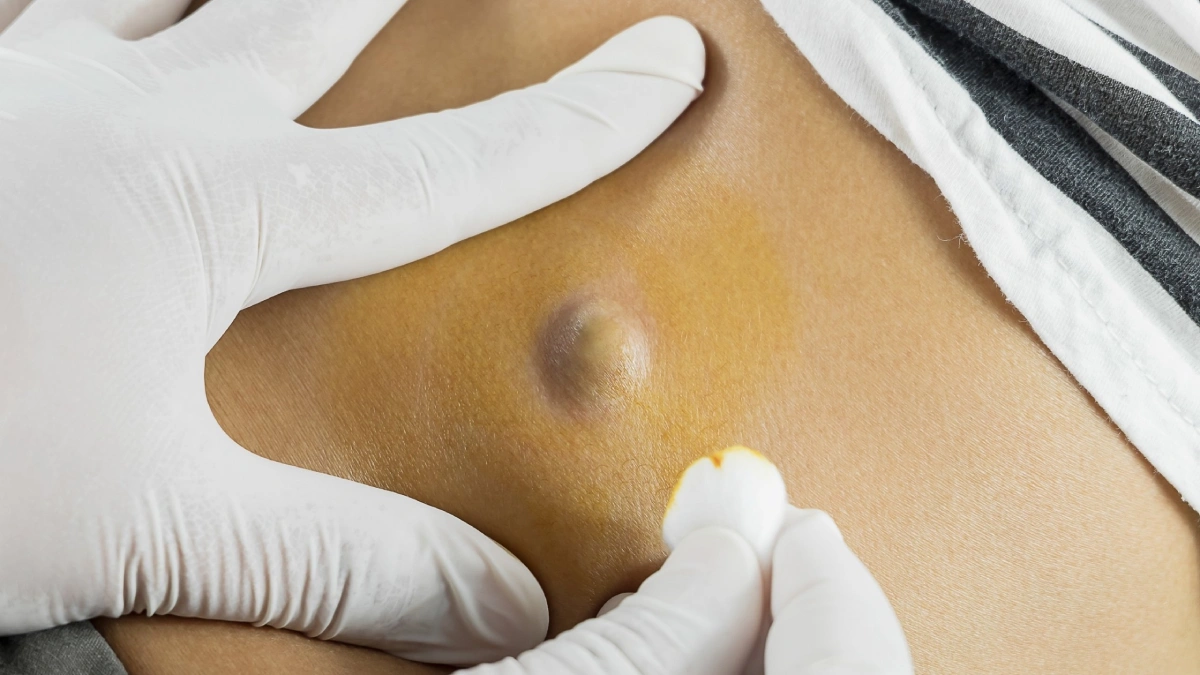
Despite the name, what many people call a “sebaceous cyst” is often an epidermoid or pilar cyst. These are benign, slow-growing lumps that form just under the skin when a hair follicle or oil gland becomes blocked.
Typical features include:
- A smooth, round lump under the skin that can be moved slightly. Common on the scalp, face, neck, shoulders, back and genital area.
- A small opening or “punctum” in the centre.
- A firm, rubbery feel.
- Skin-coloured, or slightly yellow, with no redness when calm.
Inside the cyst is a soft, foul-smelling, toothpaste-like material made up of keratin, the same protein found in hair and nails. Cysts are not contagious, and in most cases, they are not dangerous. However, because they sit under a small, closed opening, they can become swollen and inflamed (sterile reaction to the contents/keratin) or infected if bacteria get inside, typically from ‘at home surgery’.
On the face, even small cysts can be quite noticeable. Many people seek treatment long before any infection occurs, simply because they feel self-conscious in photos or at work. Typically, the cysts on the face are pilar (trichelemmal cyst) rather than epidermoid cysts.
It is important to be aware that there are many other potential diagnoses that should not be missed, and having a dermatology review for any worrisome lesions is recommended.
Realising when an Epidermoid (Sebaceous) Cyst is Infected: What Changes When Infection Sets In?
A cyst may be present for months or years with little change. Problems tend to arise when the cyst becomes inflamed or infected.
- Inflamed Epidermoid cyst: The lump becomes red, swollen and tender, often due to the contents leaking into surrounding tissue. This can feel very sore, but may not involve bacteria (sterile reaction to keratin contents – most common).
- Infected Epidermoid (sebaceous) cyst: Bacteria enter the cyst through the punctum or a small split in the skin. The body forms pus to fight the infection, creating a painful abscess (less common).
Signs that a previously quiet cyst is now infected can develop over just a few days and may continue to worsen without treatment.
Worried About an Infected Cyst?
If you’re concerned that a cyst may be infected, or you would like to discuss removal, we will be happy to arrange a convenient appointment for you. If you are unwell or have a fever, we recommend that you attend your nearest emergency department.
How Can You Tell If a Cyst Is Infected?
Many people ask, “How can you tell if a cyst is infected?”
When sebum and keratin are contained in the cyst, there is usually no reaction, but when introduced outside the cyst, there is a foreign body reaction that mimics infection. Think of water pipes in your house. As long as water stays in the pipes, there is no issue, but a leak caused damage and reactions in the surroundings.
Several warning signs suggest infection is present rather than just a harmless cyst.
- Increasing pain: Throbbing, aching or sharp pain that makes it difficult to lie on, move or touch the area.
- Redness and heat: The skin over the cyst becomes bright red or purple and feels hot.
- Swelling: The lump enlarges quickly, and the skin may look stretched or shiny
- Soft or “squishy” centre: The cyst may feel fluctuant, like a water balloon, due to the presence of pus.
- Discharge: Yellow or green pus, sometimes foul-smelling, may drain from the opening.
- Systemic symptoms: Feeling generally unwell or suffering from fever, chills, or fatigue at the same time as discovering the cyst.
Most cysts that feel infected are not truly infected with bacteria, but there is an irritated reaction in the skin to cyst contents having leaked into the skin.
Even if you are unsure whether the cyst is truly infected, a painful, rapidly enlarging lump should be assessed promptly.
Fact or Myth: Sebaceous Cysts Go Away on Their Own
Sebaceous cysts do not go away on their own, or at least not completely.
A cyst may shrink temporarily if some contents leak out onto the skin or are reabsorbed by the body. The lump can seem to “deflate” for a while. However, the sac or lining that created the cyst in the first place often remains. This means the cyst can slowly refill over time.
Once a cyst has become inflamed or infected, it is unlikely to settle permanently without medical treatment. Occasionally, very small cysts do flatten and never return, but this should be considered the exception rather than the rule. If a lump is changing, causing discomfort, or worrying you, it is safer to have it properly examined rather than waiting indefinitely for it to disappear.
When to Worry About an Epidermoid (Sebaceous) Cyst
Most epidermoid cysts are benign and classified as not dangerous. However, you should seek urgent medical advice if:
- The area is extremely painful and swollen, especially if the pain feels as if it is spreading to other areas.
- You feel feverish, generally unwell or develop chills.
- Redness spreads quickly away from the cyst, suggesting cellulitis.
- You notice red streaks travelling up a limb.
- The cyst is near the eye, nose or mouth, and swelling affects vision, breathing or swallowing.
- You have diabetes, are on immunosuppressant medication, or have a weakened immune system.
Even if these red-flag features are absent, it is still sensible to have a new or changing lump checked by a specialist, particularly if it is on the face or another visible area.
What Not to Do: Why Home “Remedies” Can Make Things Worse
It is very tempting to squeeze, lance or “pop” a painful cyst at home. Social media is full of videos that make this look simple and satisfying. In reality, attempting to treat a sebaceous cyst at home can cause significant problems:
- Incomplete drainage: Squeezing often empties only part of the cyst; the sac remains and quickly refills.
- Driving the infection or cyst content deeper and outside the cyst itself: Pressure can force bacteria and material further into the tissue, worsening the abscess.
- Scarring and pigmentation: Cutting with a needle or blade increases the risk of prominent scars or dark marks, particularly on the face.
- Delayed diagnosis: Not every lump is a cyst; self-treatment can mask more serious conditions.
Self-treatment is strongly discouraged because it increases the risk of infection, scarring and misdiagnosis, and can further complicate a condition. Truly infected cysts are usually due to at-home self-treatment.
If a cyst is bothering you, the safest option is to have it evaluated and, if appropriate, removed in a controlled, clinical setting.
Safe Medical Treatments for an Infected Epidermoid (Sebaceous) Cyst
Treatment depends on whether the cyst is inflamed, infected, or both, and its location on the body.
Forms of Treatment
Incision and Drainage
When a sebaceous cyst is clearly infected and filled with pus, the first step is often to relieve pressure and treat the infection:
- The area is numbed with local anaesthetic.
- A small incision is made in the skin to allow pus to drain.
- The cavity may be gently irrigated and a dressing applied.
This usually gives rapid pain relief and allows the surrounding tissue to begin healing. However, incision and drainage alone do not always remove the cyst lining, so a definitive excision may be recommended later to prevent recurrence.
Dr Thomas does not perform incisions and drainages, but is happy to recommend expert plastic surgeons – please contact us, and we can direct you onward without delay.
Antibiotic Treatment
Antibiotics may be prescribed if:
- There is spreading redness or cellulitis.
- You have systemic symptoms such as fever.
- The infected area is large or in a high-risk location (for example, near the eye).
- You have underlying health conditions that make infection more risky.
The exact choice and duration of antibiotics depend on your overall health and local prescribing guidelines. These medicines are always used alongside, not instead of, appropriate surgical management when pus is present.
Definitive Excision
Once infection and inflammation have settled, the most reliable way to stop a cyst from coming back is to remove it entirely:
- Under local anaesthetic, the cyst and its lining are carefully dissected out.
- The wound is closed with fine stitches, usually along natural skin lines, to minimise scarring.
- The specimen can be sent to a laboratory for confirmation of the diagnosis if needed.
This approach greatly reduces the chance of recurrence and is often recommended for troubled or cosmetically noticeable cysts. If the cyst has been inflamed before, complete excision can be preferable as the cyst lining can become tethered and scarred to the surrounding tissue.
Treatment for cysts on the face: Balancing Medical Safety and Appealing Appearance
A cyst on the face can be particularly distressing, and many patients worry about scarring from treatment. Facial cyst procedures should be planned with both medical and cosmetic outcomes in mind.
Key considerations include:
- Precise placement of incisions along natural skin creases, where possible.
- Use of fine sutures and careful technique to minimise tissue trauma.
- Clear aftercare advice, including when to remove stitches and how to care for the wound.
- Sun protection guidance, as healing scars can darken with UV exposure.
In some cases, staged treatment is recommended: first, managing an acutely infected cyst with drainage, then returning for planned excision once the area is calm and easier to close neatly.
If the cyst is close to sensitive structures such as the eye or lip, seeing a consultant dermatologist with specific experience in facial surgery is especially important.
What to Expect Before, During and After Cyst Treatment
Before Your Appointment
You may find it helpful to:
- Note when you first noticed the cyst and how it has changed.
- Record any episodes of pain, discharge, or swelling.
- List your medications and any allergies.
- Avoid squeezing or applying home remedies in the days before your visit.
During the Procedure
- Your dermatologist will confirm the diagnosis and talk through your options, including the pros and cons of each approach.
- Local anaesthetic is used to numb the area; you may feel brief stinging, then pressure, but no sharp pain.
- The agreed procedure is carried out, usually in under 30–45 minutes, for a straightforward cyst.
- A dressing is applied, and you’ll receive written aftercare instructions before you leave.
Aftercare and Healing
- You may experience mild soreness for a few days, typically well controlled with simple pain relief if needed.
- Keeping the area clean, dry and protected as advised helps reduce infection risk.
- If stitches are used, they are typically removed after 5–14 days, depending on the site.
- The scar will initially be pink, gradually fading over several months. Good sun protection helps it blend more quickly.
A follow-up appointment can be arranged to review healing, remove stitches and plan any further care if required.
Frequently Asked Questions About Inflamed Epidermoid Cysts
Is a painful lump always an epidermoid (sebaceous) cyst?
Not necessarily. Other conditions, such as boils, inflamed hair follicles, lipomas, or, rarely, skin cancers, can also present as red or painful lumps. This is why self-diagnosis is risky. If you notice a new or changing lump, especially one that is painful or persistent, it is wise to have it assessed by a dermatologist.
Can I leave an infected cyst to settle on its own?
Occasionally, a mildly inflamed cyst may calm down with time. However, once a cyst is clearly infected, there is a real risk that the infection will worsen or spread if left untreated.
Relying on home remedies or over-the-counter creams can delay effective care and make later surgery more difficult. If you suspect a sebaceous cyst is infected, seek medical advice rather than waiting.
Will I always have a scar after treatment?
Any procedure that cuts the skin will leave some form of scar, but in expert hands, these are usually fine and fade well.
On the face, incisions are planned carefully along natural lines or creases, and stitches are chosen to maximise cosmetic outcomes. Over time, many patients find that scars are far less noticeable than the original cyst. If scarring is a major concern, botulinum toxin and lasers can be used to improve the appearance.
Can an infected epidermoid (sebaceous) cyst come back?
If the entire cyst lining is removed at excision, recurrence in the same spot is uncommon. However, if infection or scarring makes it difficult to remove all the sac, or if only drainage is performed, there is a higher chance of the lump returning. New cysts can also form elsewhere on the body, particularly in people who are prone to them.
Is treatment suitable if I have other medical conditions?
In most cases, yes, but your dermatologists will take your full medical history into account. Conditions such as diabetes, blood-thinning medication or immune-suppressing treatments may influence how infections are managed and how procedures are planned. This is another reason why consultant-led care is valuable: your treatment can be tailored to you as a whole person, not just the cyst.
Think You Need Help with an Inflamed Epidermoid Cyst?
There is no need to live with a painful, swollen lump or worry that it may be something serious.
the Thomas Clinic offers self-referral, direct to one of our central London locations (Harley Street, One Welbeck and HCA at the Shard), where you will be seen by a leading consultant dermatologist. Our goal is to provide clear, personalised advice on the safest and most effective treatment options for you.
Our booking process is simple and easy to follow:
About The Author
Dr. Thomas is a Consultant Dermatologist with specialities in general dermatology, skin cancer, and advanced dermatologic therapies. He also previously held a substantive consultant role at Guy’s and St Thomas’ NHS Foundation Trust and is part of the Skin Tumour Unit at St John’s Institute of Dermatology.
Learn more about Dr. Thomas – About Dr Bjorn Thomas
Connect with Dr. Thomas on LinkedIn – Dr Bjorn Thomas