Written By Dr Bjorn Thomas | Last Updated June 2026
Rosacea can start subtly. A little flushing after a hot drink. Redness that lingers after exercise. Skin that suddenly stings when you use products you once tolerated. At first, it is easy to dismiss it as sensitive skin, stress, weather, or just getting older.
In the clinic, I often see people after months or years of trying to manage rosacea alone. Some have changed their skincare repeatedly. Some have used acne products that made things worse. Others have simply waited, hoping it would settle by itself.
So, what happens if rosacea is left untreated? The answer is not the same for everyone. Some people have mild symptoms that come and go. Others gradually develop more persistent redness, bumps, visible vessels, eye irritation, or thickening of the skin, especially around the nose.
The important point is this: rosacea is manageable, but it is usually easier to control when it is recognised early and treated properly.
Key Takeaways
- Rosacea is a long-term inflammatory skin condition that usually affects the central face.
- Untreated rosacea may become more persistent over time, especially if triggers are not identified.
- Symptoms can include flushing, redness, burning, stinging, bumps, visible vessels and eye irritation.
- Rosacea can progress, but it does not affect everyone, and severe changes are uncommon.
- Rosacea can affect confidence, mood and quality of life, even when symptoms look mild to others.
- A dermatologist can confirm the diagnosis and recommend treatment based on your rosacea pattern.
Jump to Section
- What Is Rosacea and Why Does It Need Managing?
- Persistent Redness and Facial Flushing
- Bumps, Spots and Skin Texture Changes
- Visible Blood Vessels and Thread Veins
- Eye Symptoms: Why Ocular Rosacea Matters
- Skin Thickening and Rhinophyma
- The Emotional Impact Of Untreated Rosacea
- Does Rosacea Go Away On Its Own?
- How Skincare and Exfoliation Fit In
- When To See A Dermatologist
- What Treatment Might Involve
- Book A Rosacea Consultation
- Resources and Further Reading
What Is Rosacea and Why Does It Need Managing?
If you are searching for what happens if rosacea is left untreated, you are probably worried that symptoms may progress. That is a reasonable concern, but it is important not to be alarmist; I can help you to better manage your condition.
Rosacea does not always worsen dramatically. Some people remain mild for years. However, untreated or poorly managed rosacea can become more difficult to control, especially if triggers are repeated, and the skin barrier stays irritated.
The main possible outcomes are:
- Redness becomes more persistent.
- Flushing happens more easily.
- Skin becomes more sensitive and reactive.
- Bumps and pustules become more frequent.
- Small visible blood vessels become more noticeable.
- Eye symptoms develop or worsen.
- In some people, the skin can thicken over time, especially around the nose.
The NHS lists common triggers including alcohol, spicy foods, hot drinks, sunlight, hot or cold temperatures, aerobic exercise and stress. If these triggers are not identified, rosacea may keep flaring, and the skin may spend more time inflamed. It is important to note that if you don’t react to the triggers above, or don’t feel they aggravate your rosacea, you don’t necessarily need to avoid them.
Persistent Redness and Facial Flushing
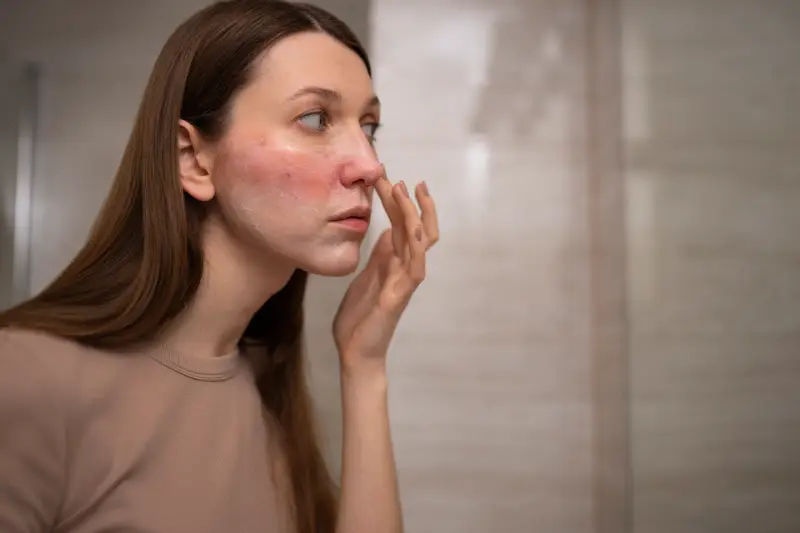
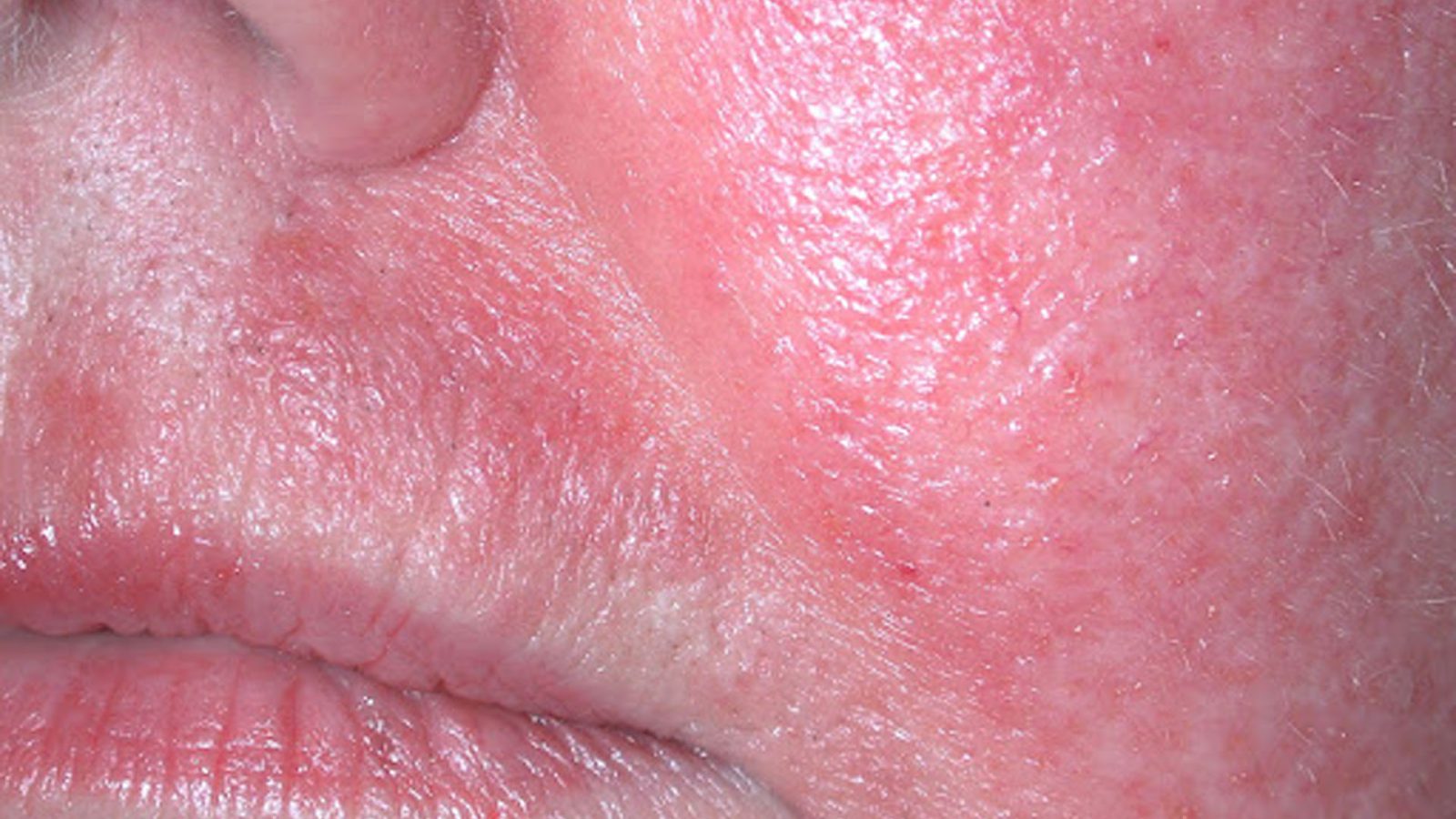
One of the most common changes I see in untreated rosacea is flushing that gradually turns into more constant background redness.
At first, the redness may come and go. Later, patients often describe looking permanently flushed, especially on the cheeks and nose. The skin may feel warm, tight, or prickly. Some people also find that even gentle skincare starts to sting.
This happens because rosacea is partly linked with blood vessel reactivity. Over time, repeated flushing can make the face look red more often, and tiny blood vessels may become visible.
This is the point where people often feel frustrated. They may have tried covering redness with makeup, only to find that cleansing it off irritates the skin further. A calmer routine and appropriate medical treatment can make a significant difference, but it helps to address the pattern early.
Bumps, Spots and Skin Texture Changes
Rosacea can sometimes cause red bumps and pus-filled spots. These are often mistaken for acne, but they are not exactly the same.
That distinction matters because acne-style routines can irritate rosacea. Strong foaming cleansers, scrubs, benzoyl peroxide, high-strength acids, and aggressive exfoliation can all worsen burning and redness in some people.
The BNF treatment summary notes that the papules and pustules of rosacea may respond to treatments such as topical azelaic acid, topical ivermectin, topical metronidazole, or oral treatment in selected cases.
When bumps are left untreated, patients may experience more frequent flares, discomfort and skin sensitivity. Some people also develop post-inflammatory marks, especially if they pick at the bumps or if the skin is repeatedly inflamed.
Visible Blood Vessels and Thread Veins
Another possible effect of untreated rosacea is the development of visible small blood vessels, often called facial thread veins or telangiectasia.
These may appear as fine red lines on the cheeks, around the nose, or across the central face. They are usually harmless, but they can become cosmetically frustrating because skincare alone rarely removes established vessels.
At this stage, management often has two parts:
- Treating the rosacea activity that is driving flushing.
- Considering laser or light-based treatment for visible vessels where appropriate.
If triggers continue and the rosacea remains active, new vessels can still develop over time. This is why I usually discuss both treatment and maintenance, rather than treating redness as a one-off cosmetic issue.
Eye Symptoms: Why Ocular Rosacea Matters
Rosacea can affect the eyes and eyelids. This is known as ocular rosacea.
Symptoms can include:
- Dryness.
- Grittiness.
- Burning.
- Watery eyes.
- Red eyelid margins.
- Recurrent styes or eyelid irritation.
- Light sensitivity.
Eye involvement is one of the reasons I would not ignore rosacea. Mild eye irritation can often be managed, but persistent symptoms should be assessed because ocular rosacea can become uncomfortable and disruptive.
If you have eye pain, changes in vision, significant light sensitivity, or severe redness in the eye itself, seek medical advice promptly.
Skin Thickening and Rhinophyma
A less common but important feature of rosacea is thickening of the skin, known a phymatous change. It is most often discussed in relation to the nose, where it is called rhinophyma.
Modern classification of rosacea has moved away from treating it as a fixed sequence of stages. The international ROSacea COnsensus (ROSCO) panel recommends describing rosacea by features rather than assuming one form strictly progresses to another. Phymatous change is regarded as a distinct, diagnostic feature in its own right, not simply the endpoint of severe redness or bumps.
The British Association of Dermatologists explains that rhinophyma is mainly seen in people with rosacea and usually develops after rosacea has been active for many years. It is seen more often in fair-skinned men aged 50 to 70. You can read more here: BAD rhinophyma leaflet.
Importantly, most people with rosacea will never develop rhinophyma. It is also worth being honest about the evidence: while keeping rosacea well controlled is sensible, there is currently no strong proof that treating earlier redness or bumps prevents phymatous change from developing. Long-term management remains worthwhile, but I would not want anyone to feel that thickening is an inevitable destination.
If you are starting to notice thickening, contour change, enlarged pores, or a more bulbous nose shape, I would recommend assessment rather than waiting.
The Emotional Impact Of Untreated Rosacea
Rosacea is often described as benign, meaning it is not dangerous in the way skin cancer can be. However, benign does not mean trivial.
Facial redness can be emotionally difficult because it is visible. Patients often tell me they feel embarrassed, tired of being asked if they are hot or unwell, or anxious about social events. Others avoid photographs, meetings, exercise, or situations where flushing might be noticed.
This emotional burden matters. A good treatment plan should consider how rosacea affects your daily life, not just how it looks in clinic lighting.
For many people, even partial improvement brings relief. Fewer flares, less burning, and a better understanding of triggers can make the condition feel much more manageable.
Does Rosacea Go Away On Its Own?
Rosacea usually does not go away permanently by itself. It tends to be a long-term condition that can come and go.
That said, symptoms can improve when triggers are reduced, the skin barrier is repaired, and appropriate treatment is used. The goal is control, not a guaranteed cure.
NICE CKS outlines treatment options based on rosacea features, including topical treatments for redness or inflammatory bumps, and oral doxycycline in selected cases.
In practice, I usually aim for:
- Fewer flare-ups.
- Shorter flares when they happen.
- Less stinging and burning.
- Reduced bumps and pustules.
- Less redness
- Better tolerance of skincare.
- A long-term maintenance plan.
How Skincare and Exfoliation Fit In
Many people with untreated rosacea assume their skin needs more exfoliation because it feels rough, bumpy, or uneven. Sometimes this is true, but often the roughness is caused by inflammation, irritation, or a damaged skin barrier.
This is where my guide on How to Exfoliate Sensitive Rosacea Skin will be useful. This article explains why scrubs, strong acids, cleansing brushes, and daily resurfacing products can be a problem for reactive rosacea skin, and breaks down your logical and safe options for at-home care.
For now, my general advice is simple: do not exfoliate inflamed rosacea skin aggressively.
If your face is hot, red, sore, stinging, peeling, or actively flaring, focus on calming the barrier first. Exfoliation can be considered later, but only if the skin is stable and the product is introduced very cautiously.
A rosacea-safe baseline routine usually includes:
- Gentle cleanser.
- Fragrance-free moisturiser.
- Daily sun protection.
- Avoidance of known triggers.
- Prescription treatment when needed.
The NHS recommends choosing sunscreen with at least SPF 30 and at least 4-star UVA protection. See: NHS sunscreen and sun safety.
When To See A Dermatologist
You should consider seeing a dermatologist if:
- Redness is becoming more persistent.
- Flushing is happening more easily.
- Bumps or pustules keep returning.
- Your skin burns or stings with basic products.
- You have visible vessels that bother you.
- You have eye symptoms.
- You are unsure whether it is rosacea, acne, dermatitis, lupus, or another condition.
The NHS notes that rosacea can look like other conditions, including acne, contact dermatitis, seborrhoeic dermatitis, lupus and keratosis pilaris. That is one of the reasons a proper diagnosis matters. See: NHS rosacea guidance.
My work includes inflammatory skin conditions such as rosacea, acne and eczema, as well as skin cancer and other skin concerns.
You can read more about my background on this page: About Dr Björn Thomas.
What Treatment Might Involve
Treatment depends on your pattern of rosacea.
I would usually look at whether the main issue is flushing, fixed redness, bumps, visible vessels, sensitivity, or eye symptoms.
A plan may include:
- Trigger identification and practical avoidance strategies.
- Gentle skincare and barrier repair.
- Daily sun protection.
- Topical treatments such as azelaic acid, ivermectin or metronidazole.
- Oral treatment in selected cases.
- Laser or light-based treatment for persistent redness and visible vessels.
The British Association of Dermatologists guideline also notes that some people with rosacea benefit from washing with emollients, moisturising regularly and using appropriate sun protection. See: BAD rosacea guideline.
The right approach should feel manageable. With rosacea, calm and consistent treatment often beats aggressive and expensive.
Book A Rosacea Consultation
If you are worried about what happens if rosacea is left untreated, or if your symptoms are already becoming harder to control, I can help you understand what is happening and what your treatment options are.
Resources and Further Reading
- NHS: Rosacea symptoms, triggers and treatment
- British Association of Dermatologists: Rosacea patient leaflet
- NICE CKS: Rosacea management and treatment options
- BNF: Rosacea treatment summary
- British Association of Dermatologists: Rhinophyma patient leaflet
- NHS: Sunscreen and sun safety
- BAD guideline: Rosacea management, skincare and sun protection
Our Locations
55 Harley Street, London, W1G 8QR
One Welbeck, 1 Welbeck Street, London, W1G 0AR
HCA The Shard, 32 St Thomas Street, London, SE1 9BS
About The Author
Dr. Thomas is a Consultant Dermatologist with specialities in general dermatology, skin cancer, and advanced dermatologic therapies. He also previously held a substantive consultant role at Guy’s and St Thomas’ NHS Foundation Trust and is part of the Skin Tumour Unit at St John’s Institute of Dermatology.
Learn more about Dr. Thomas – About Dr Bjorn Thomas
Connect with Dr. Thomas on LinkedIn – Dr Bjorn Thomas