

The Economist recently published an article about moisturisers and it made me think.
How do I to choose the best moisturiser?
There’s no one-size-fits-all answer. To figure out what’s right for you, consider your goal:
- Reducing fine lines by boosting hydration
- Improving dry skin which may be a result of an underlying skin barrier issue
- Have you unintentionally damaged your skin barrier from harsh cleansers or leave-on products?
Once you’ve answered these, you might even realise that you don’t need a moisturiser at all. If you do, here’s what you should know:
Understanding Moisturisers
Traditional formulations rely on petrolatum or paraffin to create a water-impermeable barrier, these are often greasy. Modern versions tend to be more breathable. Most contain a combination of three classes of ingredients:
- Humectants act like sponges, pulling in water
- Occlusives form a barrier to prevent water loss from the skin (water proofing)
- Emollients fills the cracks in the skin, thereby smoothing.
Typically, other specialist ingredients are then added, which can have additional effects. These typically act as a USP for the product and might include:
- Ceramides, which are considered a physiological lipid (fats), which may integrate into the skin
- UV protection – either ‘physical’ or chemical ultra-violet based ingredients.
- Niacinamide, a B vitamin that may improve barrier function, reduce inflammation in conditions like acne/rosacea and have a sun protective effect
Key Ingredients to Look For
- Glycerin – A powerhouse traditional humectant.
- Hyaluronic acid – A natural carbohydrate humectant that enhances hydration, often combined with glycerin (boosting water retention and reducing stickiness).
- Dimethicone – A silicone polymer that acts both as an occlusive (waterproof barrier) and an emollient (fills in cracks). Other products like Squalane, Cocoa Butter or Coconut oil can be used as silicone free alternatives.
Choosing a Moisturiser
On a recent visit to the excellent John Bell & Croyden pharmacy in Marylebone, I looked at variety of moisturisers. The best way to choose is to check the ingredients list (see the images attached)
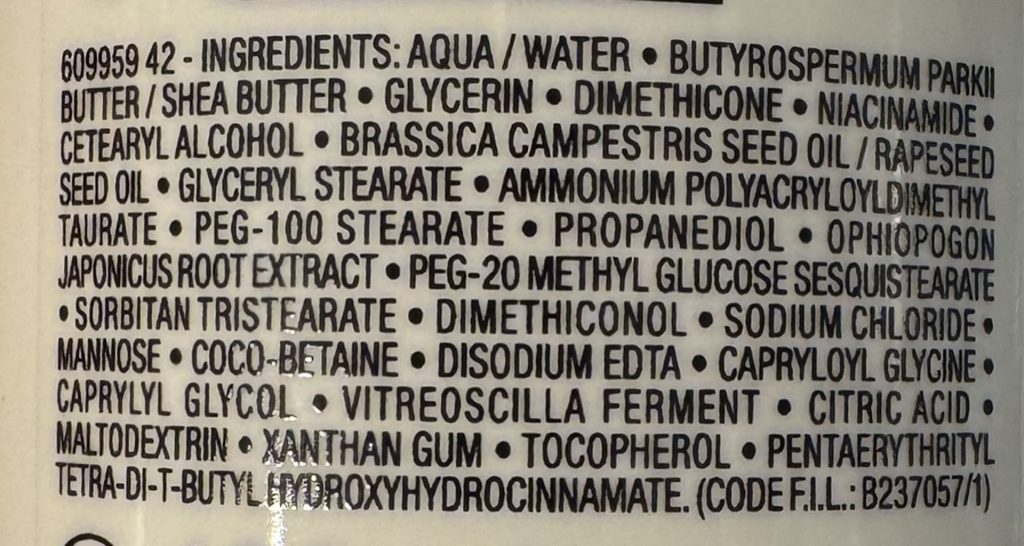

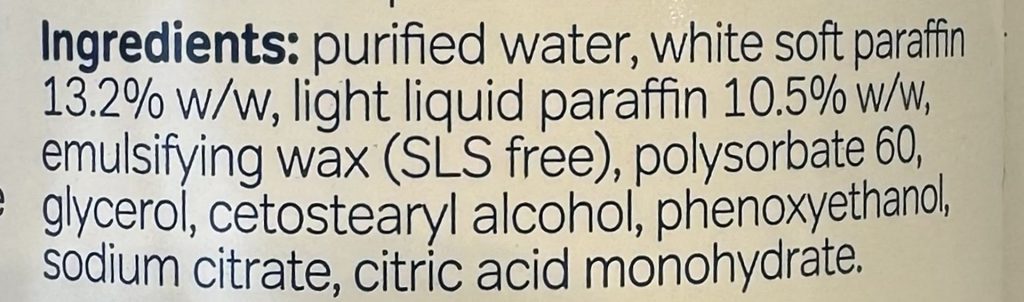
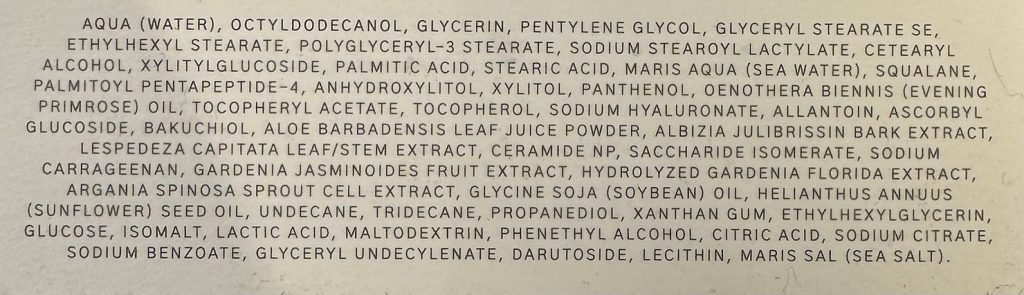
What stands out?!
Of the modern moisturisers, there is a mix of mix hyaluronic acid, dimethicone, ceramides. One avoids silicones, using squalene instead, while another highlights niacinamide. All the moisturisers have a glycerin backbone. As glycerin is so effective, this is not a surprise.
So, What’s the Best Moisturizer?
If you have glycerin, hyaluronic acid and something like dimethicone, as an occlusive, you’ll have a nice product. Just remember, there isn’t one best, as they are all very similar. The best moisturizer is the one you like using and that you don’t react to. And remember—price doesn’t always reflect effectiveness.