Written By Dr Bjorn Thomas | Last Updated June 2026
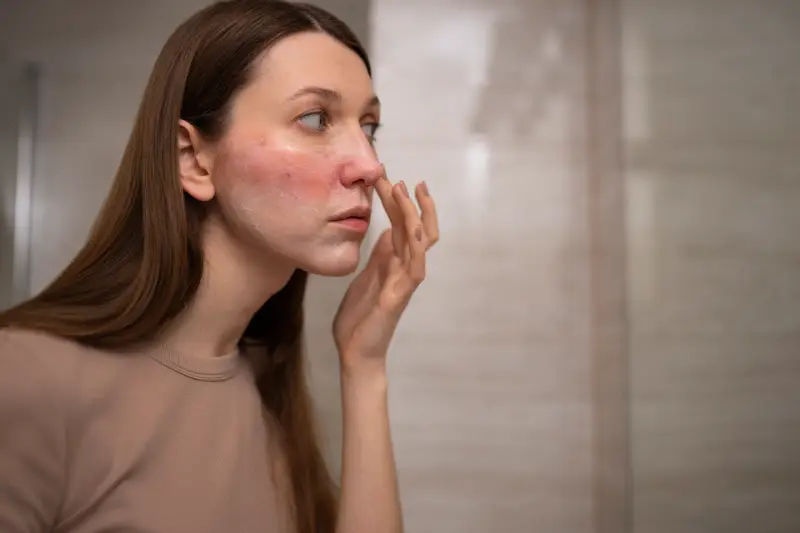
If you have rosacea, exfoliation can feel confusing. You may have been told to remove dead skin cells, smooth texture, clear bumps, or brighten dullness. At the same time, your skin may sting when you wash it, flush easily after skincare, or react badly to products that other people tolerate without difficulty.
I often see patients who have tried to exfoliate their way out of rosacea symptoms. They use scrubs, acids, cleansing brushes, or strong resurfacing products, hoping the redness and bumps will improve. Unfortunately, for sensitive rosacea-prone skin, that approach can make things worse.
Let me be straight about this from the start: for normal, healthy skin, there is no medical need to exfoliate. Your skin sheds dead cells perfectly well on its own. Exfoliation is a cosmetic choice, not a skincare requirement. In rosacea, where the skin barrier is often already weakened and reactive, that cosmetic choice can do more harm than good. So the real answer to how to exfoliate sensitive rosacea skin is often: you probably shouldn’t. This guide explains why, what drives the urge to exfoliate, and what to do instead.
Key Takeaways
- Rosacea-prone skin is often reactive, so exfoliation should be cautious rather than routine.
- Physical scrubs, rough cloths and cleansing brushes are usually too irritating for sensitive rosacea skin.
- If you exfoliate, start with a low-strength product once weekly and avoid using it during active flares.
- Burning, peeling, increased flushing, or new soreness are signs to stop exfoliating and repair the barrier.
- A basic routine with a gentle cleanser, moisturiser and SPF often improves sensitivity before exfoliation is considered.
- If redness, bumps or stinging keep returning, a dermatologist can help decide whether you need rosacea treatment rather than more exfoliation.
Jump to Section
- Why Rosacea Skin Reacts So Easily
- How To Exfoliate Sensitive Rosacea Skin Safely
- Physical Exfoliation: Why Scrubs Are Usually A Problem
- Chemical Exfoliation: Which Ingredients Need Caution?
- What I Usually Recommend Instead Of Exfoliating More
- How To Build A Rosacea-Safe Exfoliation Plan
- Exfoliation Mistakes I See In Rosacea Patients
- When To Stop Exfoliating Immediately
- Seeing A Dermatologist For Rosacea-Safe Skincare Advice
- Book A Rosacea Skincare Consultation
- Resources and Further Reading
Why Rosacea Skin Reacts So Easily
Rosacea is a common long-term skin condition that mainly affects the face. The NHS describes early signs as redness or flushing across the nose, cheeks, forehead and chin, often with a burning or stinging feeling when using water or skincare products.
The British Association of Dermatologists also explains that rosacea can fluctuate from mild to severe and may involve persistent redness, dilated blood vessels, small bumps, pus-filled spots, and eye irritation. The B.A.D patient information leaflet is a useful read for helping manage rosacea triggers and symptoms.
The important point for exfoliation is this: rosacea-prone skin is often reactive skin. It may not cope well with friction, strong activities, heat, fragrance, or sudden routine changes.
Common rosacea triggers include:
- Sun exposure.
- Hot drinks.
- Alcohol.
- Spicy food.
- High and low temperatures.
- Stress.
- Exercise.
- Irritating skincare.
If you exfoliate during a period when your skin is already triggered, you are adding another stressor. That is why timing and product choice matter.
How To Exfoliate Sensitive Rosacea Skin Safely
When patients ask me how to exfoliate sensitive rosacea skin, my first answer is usually: slowly, gently, and only when the skin barrier is stable.
Exfoliation is not automatically wrong for rosacea. Some people can tolerate a carefully chosen product. However, it should never be the foundation of rosacea management. The foundation is usually:
- A gentle cleanser.
- A barrier-supporting moisturiser.
- Daily sun protection.
- Trigger control.
- Prescription treatment, where appropriate.
Once the skin is calm, exfoliation can be considered carefully. I would normally suggest the following principles.
Start With Once Weekly, Not Daily
Daily exfoliation is usually too much for sensitive rosacea-prone skin. Even if the product is marketed as gentle, daily use can slowly break down the barrier.
A safer starting point is once weekly, at night, using a very mild product. If there is no stinging, burning, peeling, or next-day redness after several weeks, frequency can sometimes be adjusted. But many people with rosacea do best with very minimal exfoliation.
Avoid Exfoliating During A Flare
If your skin is hot, red, sore, swollen, bumpy, or actively stinging, this is not the time to exfoliate. During a flare, I would usually simplify the routine rather than add active products.
A flare routine might include:
- Gentle cleansing or rinsing only.
- Plain moisturiser.
- SPF in the morning.
- Avoiding fragrance and active exfoliants.
- Prescription treatment, if already advised.
Patch Test First
Before applying an exfoliant to the whole face, test a small area of normal skin (ie, on the inside of your arm) for a few nights, spaced apart. If the area becomes red, itchy, bumpy, or sore, do not push through it. This is a simplified, at-home version of the open application test.
Rosacea skin often does not purge in the way people describe online. If it is burning, it is more likely to be irritated.
Use Moisturiser Before Or After
For very sensitive skin, buffering can help. This means applying moisturiser before the active product, after it, or both. The aim is to reduce direct irritation while still allowing a gentle effect.
If even buffered use stings, the product is probably not right for your skin at that time.
Physical Exfoliation Why Scrubs Are Usually A Problem
Physical exfoliation includes anything that uses rubbing or grit to remove surface skin cells. This includes:
- Face scrubs.
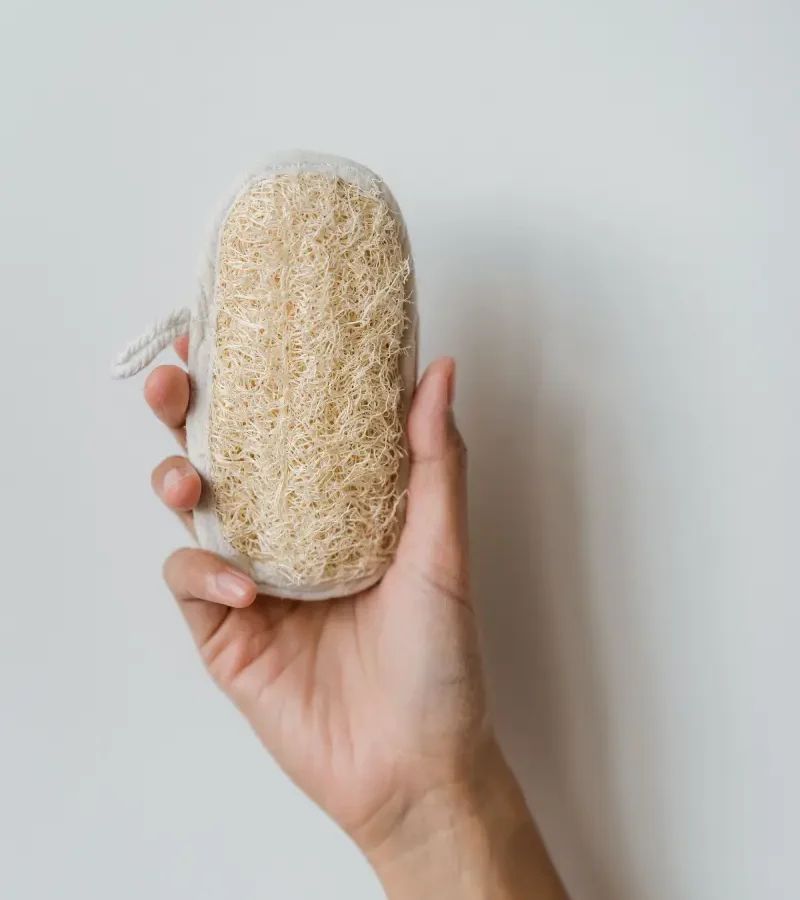
- Cleansing brushes.
- Exfoliating mitts.
- Rough flannels.
- Microdermabrasion-style devices.
For rosacea, these are usually the first things I would remove from a routine.
The problem is friction. Friction can worsen redness, trigger flushing, and disrupt the skin barrier. Even natural scrubs can be irritating because the particles can create tiny surface abrasions.
If you feel smoother immediately after a scrub but your skin looks redder the next day, that is not a good trade. Short-term smoothness is not worth triggering a longer rosacea flare-up.
A soft cloth used gently to remove cleanser is different from scrubbing. The key thing here is to be gentle. No polishing, no rubbing until the skin squeaks, and no trying to remove flakes by force.
Chemical Exfoliation Which Ingredients Need Caution?
Chemical exfoliants dissolve or loosen the bonds between dead skin cells. They are often marketed as acids or resurfacing products. Common examples include:
- Glycolic acid.
- Lactic acid.
- Mandelic acid.
- Salicylic acid.
- Polyhydroxy acids (PHAs).
- Enzyme exfoliants.
These can be helpful for some skin types, but rosacea requires caution.
Glycolic Acid
Glycolic acid is a small AHA molecule and can penetrate quickly. For sensitive rosacea skin, it can be too stimulating, especially in leave-on toners, pads, or peel products.
I would be careful with glycolic acid if your skin already stings with water or moisturiser.
Lactic Acid and Mandelic Acid
Lactic acid and mandelic acid may be better tolerated by some people than glycolic acid, but that does not make them automatically safe. Low strength and low frequency still matter.
Salicylic Acid
Salicylic acid is often used for oily or acne-prone skin. However, rosacea bumps are not the same as acne spots, so acne exfoliants can sometimes irritate rather than help.
If you have both acne and rosacea, the plan needs to be more careful. I would usually want to confirm which condition is driving the bumps before adding salicylic acid.
PHAs
Polyhydroxy acids are often marketed as gentler alternatives to AHAs. Some sensitive skin types tolerate them better, but rosacea skin can still react. Start cautiously.
Retinoids
Retinoids are not exfoliants in the scrub sense, but they do increase skin cell turnover. They can be useful for acne and some texture concerns, but they can also cause dryness and irritation. In rosacea-prone skin, they need careful introduction, if they are appropriate at all.
The NICE Clinical Knowledge Summary outlines common rosacea treatments, including topical options such as ivermectin, metronidazole and azelaic acid, and oral doxycycline in selected cases.
What I Usually Recommend Instead Of Exfoliating More
Many patients think their rosacea skin needs more exfoliation because it feels rough, uneven, or congested. In reality, that roughness is often barrier damage, inflammation, dryness, or active rosacea.
Before exfoliation, I usually focus on calming the skin. I focus on these practical steps to help you.
Reduce Irritation First
A simple barrier routine can make a significant difference:
- Gentle non-foaming or low-foaming cleanser.
- Fragrance-free moisturiser.
- Daily broad-spectrum SPF.
- Avoidance of hot water.
- No scrubs, peels, or cleansing brushes.
- No unnecessary active serums.
NHS guidance notes that rosacea skin can burn or sting when using water or skincare products, which is a useful sign that the barrier may be reactive or irritated.
Treat the Rosacea Itself
If the issue is papules, pustules, background redness, or repeated flushing, exfoliation is rarely the main treatment.
Depending on the rosacea pattern, treatment may include:
- Azelaic acid.
- Ivermectin.
- Metronidazole.
- Oral doxycycline in selected cases.
- Laser or light-based treatment for persistent redness or visible vessels.
A treatment summary by the BNF notes that papules and pustules of rosacea may respond to topical azelaic acid, topical ivermectin, topical metronidazole, or oral treatment in selected cases.
Use Azelaic Acid Carefully
Azelaic acid is sometimes useful in rosacea because it can help reduce inflammation and bumps. It can also have a mild brightening effect for post-inflammatory pigmentation. However, it can sting when the barrier is damaged, so it still needs a careful introduction and is more suitable for milder rosacea.
I would not combine azelaic acid with multiple exfoliating acids at the same time unless there is a specific reason and a clinician has guided the plan.
How To Build A Rosacea-Safe Exfoliation Plan
If your skin is calm and you still want to try exfoliation, this is the cautious structure I would usually suggest:
Week 1 to 2: Stabilise
Keep your routine simple for two weeks:
- Cleanser.
- Moisturiser.
- SPF.
- Any prescribed rosacea treatment already recommended.
Do not add exfoliants yet. You need to know your baseline before you introduce a new variable.
Week 3: Patch Test
Choose one gentle exfoliating product only. Use it on a small area once, then wait several days.
Avoid testing near the eyes, around the nostrils, or on broken skin.
Week 4: Try One Short Contact Use
If the patch test is fine, try the product for a short contact period rather than leaving it on overnight. For example, apply briefly, then rinse off if the product instructions allow this.
Then moisturise well.
Week 5 Onwards: Review The Response
Ask yourself:
- Is my skin less rough without more redness?
- Is there any stinging that lasts?
- Is the next-day redness worse?
- Are my rosacea bumps calmer or more inflamed?
- Do I need more moisturiser to compensate?
If there is any worsening, stop. A product that forces you to repair the barrier after every use is not the right product.
Exfoliation Mistakes I See In Rosacea Patients
Using Too Many Actives At Once
A common pattern is cleanser with acid, vitamin C serum, exfoliating toner, retinoid, and a renewing night cream. Each product might seem reasonable alone, but together they can overload sensitive skin.
Copying Acne Routines
Rosacea bumps can look like acne, but they should not be managed in the same way. Acne routines often include benzoyl peroxide, retinoids, salicylic acid, or strong cleansing. These can be too much for rosacea.
Believing Tingling Means It Is Working
Tingling is not proof of effectiveness. In rosacea, it is often a warning sign.
Exfoliating Flakes Off By Force
Flaking does not always mean dead skin needs removing. It may mean the barrier is inflamed or dry. Scrubbing flakes away can prolong the cycle.
Ignoring Sun Protection
After exfoliation, skin can be more sun-sensitive. Daily SPF is one of the simplest protective steps. The NHS offers clear sun safety advice here: NHS sunscreen and sun safety.
When To Stop Exfoliating Immediately
Stop exfoliating if you notice:
- Burning that lasts more than a few minutes.
- Increased flushing.
- New soreness or tenderness.
- Skin that feels tight and shiny.
- Peeling that continues for several days.
- New clusters of bumps.
- Worsening eye irritation.
Eye symptoms matter. The British Association of Dermatologists notes that rosacea can involve irritation of the eyes and eyelids, and eye symptoms should be assessed appropriately.
If your skin has reached this point, simplify the routine and allow the barrier to recover. If symptoms persist, it is sensible to book a dermatology review.
Seeing A Dermatologist For Rosacea-Safe Skincare Advice
I am Dr Björn Thomas (MBBS, PhD, MRCP), Consultant Dermatologist and founder of the Thomas Clinic. My clinical work includes inflammatory skin conditions such as acne, rosacea, eczema and psoriasis, as well as skin cancer and complex skin concerns.
When I assess rosacea, I do not just look at the product list. I look at the pattern of redness, bumps, flushing, visible vessels, sensitivity, eye symptoms, triggers, previous prescriptions, and what the patient is trying to achieve.
That matters because exfoliation is sometimes the wrong answer to the right concern. If your skin feels rough, the best answer may be barrier repair. If you have bumps, the answer may be prescription rosacea treatment. If you have redness and visible vessels, a laser may be more useful than skincare alone.
The aim is not to make your routine complicated. It is to make it safe, targeted, manageable, and realistic.
Book A Rosacea Skincare Consultation
If you are unsure whether your skincare is helping or irritating your rosacea, I can assess your skin, identify your rosacea pattern, and help you build a calmer treatment plan that is suited to you.
Resources and Further Reading
- NHS: Rosacea symptoms, triggers and treatment
- British Association of Dermatologists: Rosacea patient leaflet
- NICE CKS: Rosacea management and treatment options
- BNF: Rosacea treatment summary
- BAD guideline: Rosacea management, including emollients, moisturising and sun protection
- NHS: Sunscreen and sun safety
- Thomas Clinic: About Dr Björn Thomas
Our Locations
55 Harley Street, London, W1G 8QR
One Welbeck, 1 Welbeck Street, London, W1G 0AR
HCA The Shard, 32 St Thomas Street, London, SE1 9BS
About The Author
Dr. Thomas is a Consultant Dermatologist with specialities in general dermatology, skin cancer, and advanced dermatologic therapies. He also previously held a substantive consultant role at Guy’s and St Thomas’ NHS Foundation Trust and is part of the Skin Tumour Unit at St John’s Institute of Dermatology.
Learn more about Dr. Thomas – About Dr Bjorn Thomas
Connect with Dr. Thomas on LinkedIn – Dr Bjorn Thomas