
Written By Dr Bjorn Thomas | Last Updated May 2026
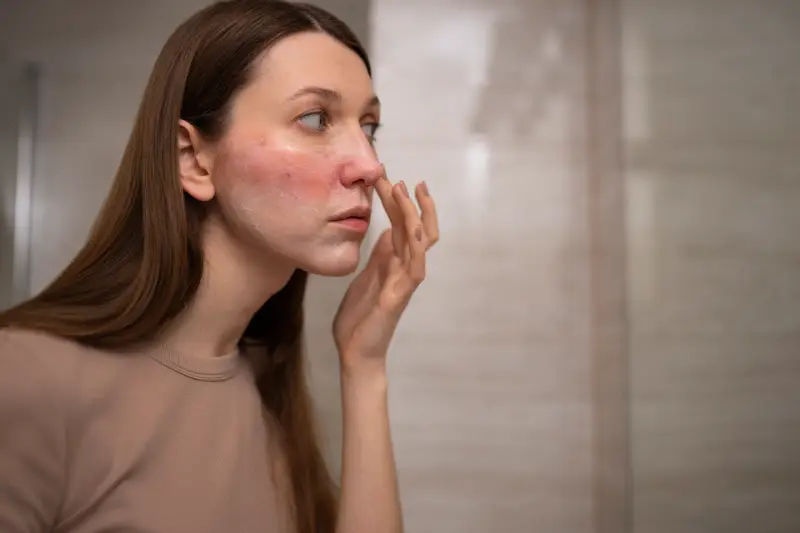
If you are living with rosacea, you will know the pattern. Your skin behaves for a while, then a busy week, a glass of wine, a hot shower, or a windy commute tips it over the edge again. Flushing. Stinging. Redness that lingers. Sometimes bumps and spots that look like acne, but do not respond to acne products.
In the clinic, I see a lot of patients who have tried to push through or cope with flare-ups or have been given mixed advice. The most useful way to approach rosacea is to treat it regularly with a long-term view, not a short-term outbreak you can scrub away.
My aim in this article is to show you how to control rosacea flare-ups in a realistic, day-to-day way, and to explain what I do when someone needs a more medicine-focused rosacea treatment for facial symptoms.
I will cover triggers, skincare, prescription options, when it is worth seeing a rosacea treatment dermatologist, and what to look for if you’ve been searching “rosacea treatment near me” or feel out of options.
Key Takeaways
- Rosacea is common and tends to wax and wane. It often affects the central face and may involve flushing, persistent redness, bumps, visible blood vessels, and sometimes eye irritation.
- Triggers are individual, but common ones include alcohol, spicy foods, hot drinks, sunlight, hot or cold weather, exercise, and stress.
- Over-cleansing, harsh exfoliation, fragranced products, and topical steroids can worsen rosacea in some people.
- The best results usually come from a calm routine plus targeted treatment (topical, oral, and sometimes laser), matched to your pattern of rosacea.
- There is no instant cure, but most people can achieve long periods of stability with a sensible plan and early flare control.
Jump to Section
- What Is Rosacea And Why Does It Flare?
- How To Control Rosacea Flare-Ups: My Step-By-Step Plan
- What Helps Rosacea Day To Day: Skincare, Lifestyle, And Trigger Control
- Rosacea Treatment For Face: The Options I Use And Why
- Rosacea Treatment Dermatologist: When You Should Escalate Care
- Rosacea Treatment Near Me: What To Look For In A Clinic
- Red Flags And When To Seek Medical Review
- My Rosacea Flare-Up Checklist
- Sources And Further Reading
What Is Rosacea And Why Does It Flare?
Rosacea is a long-term inflammatory skin condition that most often affects the central face: cheeks, nose, chin and forehead. Some people mainly flush and go red. Others develop spots and bumps. Some notice burning, stinging, or rough, reactive skin. And some develop eye symptoms such as gritty, dry, irritated eyes or inflamed eyelids.
Skin professionals have not managed to distinguish a single, simple cause. What we do know is that rosacea is strongly influenced by the skin barrier, inflammation, and blood vessel reactivity. That is why the same person can look fine in the morning and quite red by evening if their triggers stack up.
A helpful way to think about flare-ups is this:
- Rosacea skin is more reactive than average.
- Triggers push it into flare mode.
- A disrupted barrier keeps it there longer.
That is why the most effective approach is usually two-pronged: reduce trigger load and support the skin barrier, while using medical treatment where needed.
How To Control Rosacea Flare-Ups: My Step-By-Step Plan
When someone asks me how to control rosacea flare-ups, I keep it practical. You want a plan you can follow on a normal weekday, not a perfect routine that collapses the moment life gets busy.
Step 1: Work Out Your Rosacea Pattern
Rosacea does not present in a singular way. The type of rosacea you have affects what will help most.
- Flushing and/or persistent redness (often with visible vessels)
- Papules and pustules (rosacea bumps that can resemble acne)
- Thickening changes (more common on the nose in longstanding cases)
- Eye symptoms (ocular rosacea)
If you are not sure what you have, do not self-diagnose. Rosacea can resemble acne, contact dermatitis, and other facial rashes, and the wrong approach can irritate the skin further.
Step 2: Build A Low-Irritation Baseline Routine
This is where many flare-prone patients turn things around.
- Cleanse gently once daily. Use a plain light moisturiser that supports barrier function.
- Use daily sun protection.
Sunlight is a common trigger for rosacea, and daily SPF is a key prevention tool.
Step 3: Get Serious About Trigger Stacking
Most patients do not have one trigger. They have five small ones that land on the same day.
For example: cold wind outside, central heating inside, stress, hot coffee, and a late run. Any one of those might be manageable. All five can produce a flare.
The NHS lists common triggers, including alcohol, spicy foods, hot drinks, sunlight, hot or cold temperatures, exercise, and stress.
A helpful suggestion can be a simple two-week trigger audit:
- Each day, rate redness or burning from 0 to 10.
- Note weather exposure, alcohol, hot drinks, spicy food, exercise, stress, and new skincare.
- Look for patterns, not perfection.
Step 4: Treat Early, Not When It’s Unbearable
The most effective flare control is early flare control.
If you always wait until your skin is inflamed and sore, the recovery window is longer. If you recognise your early signs, you can often shorten the flare by scaling back triggers and simplifying your routine immediately.
What Helps Rosacea Day To Day: Skincare, Lifestyle, And Trigger Control
If you are searching for what helps rosacea, this is the portion of advice that usually makes the biggest difference.
The Skincare Rules I Repeat Most Often
Avoid harsh exfoliation and tingly products:
If it stings, it is usually not helping.
Avoid topical steroid creams on the face unless specifically advised. Steroids can worsen rosacea and can create a rebound redness pattern in some people.
Keep products simple during a flare:
A gentle cleanser, moisturiser, and SPF is often enough until the skin calms. Use micellar water for removing make-up and a foaming oil-based cleanser for oily skin.
Patch-test new products:
Rosacea skin is reactive skin. Introduce one new product at a time.
Lifestyle Adjustments That Often Reduce Flare Frequency
- Let hot drinks cool slightly before you drink them. (Hot drinks are a common trigger.)
- Treat exercise like a trigger you can plan around: warm up gradually, avoid overheating, and cool down properly.
- In cold weather, protect your face (scarf barrier) and moisturise before exposure.
- If alcohol triggers you, reduce frequency or switch to lower-trigger options, and watch for the trigger stacking effect.
- Manage stress where possible. I appreciate that it is not always easy, but stress is a genuine trigger for many patients.
Rosacea Treatment For Face: The Options I Use And Why
When skincare and trigger work are not enough, I move to targeted treatment based on what is driving the rosacea.
This Skin Therapy Letter Rosacea Diagnosis Management article outlines commonly used options depending on symptoms, including topical treatments for papules and pustules, and options for persistent redness.
Topical Treatments For Rosacea Bumps and Inflammation
For papules and pustules (the rosacea spot component), common topical options include:
- Azelaic acid
- Ivermectin
- Metronidazole
These are prescription treatments, and selection depends on your skin, severity, and tolerance.
Treatments For Persistent Redness
Some patients primarily struggle with background redness and flushing. It is always important to start treatment with anti-inflammatories (see ‘Topical Treatments For Rosacea Bumps and Inflammation’ and Oral Treatment For More Significant Inflammatory Flares’) as there is typically improvement in redness seen with treatment that may negate the need for other ‘anti-redness’ treatments.
There are topical options used to reduce persistent erythema in selected patients, and the Skin Therapy Letter includes guidance around agents such as brimonidine (including cautions). For flushing and persistent redness, we now find treatments like beta-blockers (particularly Carvedilol) and SSRI (‘anti-depressants’ like paroxetine) can be very helpful
This is the sort of treatment that needs sensible counselling, because overuse or incorrect use can irritate reactive skin.
Oral Treatment For More Significant Inflammatory Flares
If rosacea is moderate to severe, or if topical treatment alone is not controlling it, oral antibiotics (commonly doxycycline in suitable patients) can be used to reduce inflammation.
I always explain that this is not an antibiotic for infection in the usual sense. It is primarily an anti-inflammatory approach, and it should be used appropriately and safely. Occasionally, patients require Isotretinoin, which is a vitamin A derivative typically used to treat acne. This can be very effective for some.
Laser and Light Treatment
If redness and visible vessels are a major component, lasers like intense pulsed light (IPL) or pulse dye laser (PDL) can be very helpful for selected patients, particularly when combined with good baseline skincare.
A laser is not a substitute for routine, but it can reduce the background redness that makes flares more obvious. Usually, 2-4 treatments are required for improvement to be seen, then annual treatments can be required.
Rosacea Treatment Dermatologist: When You Should Escalate Care
Many people try to manage rosacea alone for months or years, then come to see me when they are exhausted by the cycle.
I suggest seeing a dermatologist for rosacea treatment if:
- You are flaring frequently despite a gentle routine.
- You have persistent redness that is not settling.
- You have rosacea bumps that are scarring, persistent, or affecting your confidence.
- You have eye symptoms (gritty eyes, recurrent styes, eyelid inflammation).
- You are unsure whether it is rosacea at all.
A proper diagnosis matters. Rosacea can overlap with acne, dermatitis, and other inflammatory facial rashes, and the wrong treatment can prolong the problem.
Register for treatment today, and you can arrange a consultation with me at a time that is suitable for you.
Rosacea Treatment Near Me: What To Look For In A Clinic
If you are typing rosacea treatment near me into Google, you are usually looking for two things: speed and clarity.
Here is what to expect if you opt to be privately treated by me:
Consultant-led assessment or appropriately qualified clinician
Rosacea is often straightforward, but it should still be correctly diagnosed.
A plan that includes both routine and prescription options
A clinic that only sells skincare, or only pushes procedures, is rarely the full answer.
A discussion about triggers and barrier repair
If someone ignores your triggers completely, they are missing a major part of controlling flare-ups.
Clear expectations
Rosacea is controllable, but it is usually not something you fix once and forget.
If you are based in London and want a consultant-led plan, you can book directly with the Thomas Clinic team.
Red Flags And When To Seek Medical Review
Rosacea itself is not dangerous, but there are situations where I advise medical review sooner rather than later:
- Eye involvement that is persistent or affecting vision comfort.
- Rapid worsening despite simplifying your routine – this can represent pyoderma faciale/rosacea fulminans, which requires rapid treatment to reduce the risk of scarring.
- A new, unexplained facial rash where the diagnosis is uncertain.
- Skin burning and stinging that suggests barrier breakdown or irritant dermatitis overlap.
If you are ever unsure, it is better to get a clear diagnosis than to keep rotating products.
My Rosacea Flare-Up Checklist
If you want a simple weekly system for how to control rosacea flare-ups, use this helpful checklist:
- Escalate to prescription treatment if baseline measures are not enough.
- Keep your routine stable for 2 weeks.
- Track triggers and flare severity daily.
- Use your trigger audit to help reduce trigger stacking.
- Use daily SPF and protect your skin from weather extremes.
- Avoid topical steroids on the face unless specifically advised.
Ready For Personalised Rosacea Treatment?
If you are looking for a rosacea treatment that is tailored to you, I can assess your skin, confirm the pattern of rosacea, and build a plan that fits your life.
Get in touch today.
Sources And Further Reading
- NHS: Emollients (how to use them, including soap substitutes).
- NHS: Atopic eczema overview.
- NHS: Contact dermatitis.
- NHS: Cellulitis (when to seek urgent help).
- NHS: Chilblains.
- NHS: Psoriasis.
- NHS: Scabies.
- British Association of Dermatologists: Atopic eczema patient leaflet
- NICE CKS: Atopic eczema guidance (emollients and topical corticosteroids).
- UK Primary Care Dermatology Society: Asteatotic (xerotic) eczema guidance.
- National Eczema Society: Asteatotic eczema and emollient advice.
Our Locations
55 Harley Street, London, W1G 8QR
One Welbeck, 1 Welbeck Street, London, W1G 0AR
HCA The Shard, 32 St Thomas Street, London, SE1 9BS
About The Author
Dr. Thomas is a Consultant Dermatologist with specialities in general dermatology, skin cancer, and advanced dermatologic therapies. He also previously held a substantive consultant role at Guy’s and St Thomas’ NHS Foundation Trust and is part of the Skin Tumour Unit at St John’s Institute of Dermatology.
Learn more about Dr. Thomas – About Dr Bjorn Thomas
Connect with Dr. Thomas on LinkedIn – Dr Bjorn Thomas


