
Written By Dr Bjorn Thomas | Last Updated February 2026
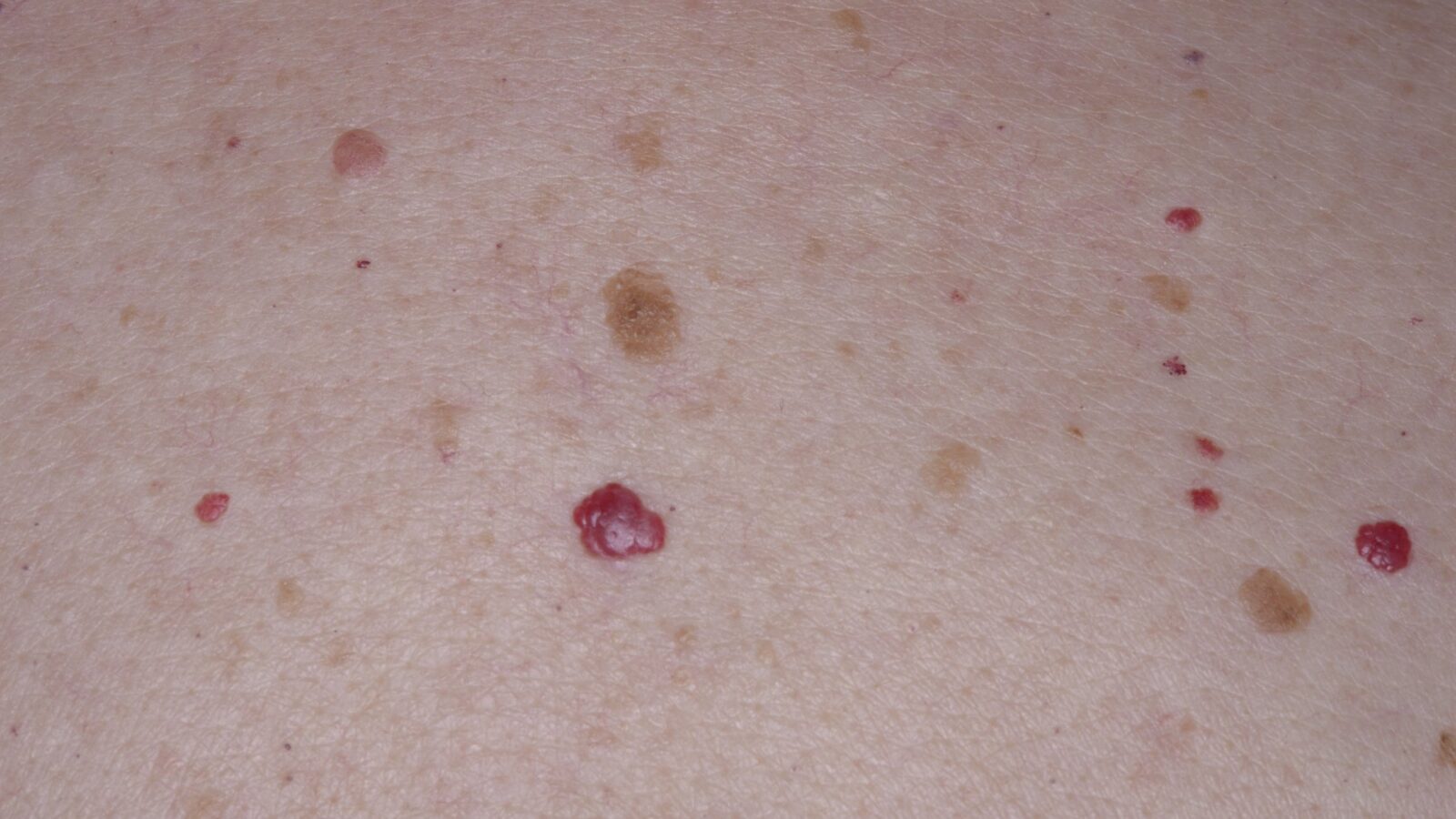
Noticing a bright red dot on the tip or side of your nose can be worrying, especially when it seems to appear out of nowhere. In many cases, this tiny bump is a cherry angioma: a very common, benign (non-cancerous) skin growth made up of small blood vessels.
This article discusses diagnosing cherry angiomas on the nose and the options you have for medical treatment.
Key Takeaways
- A cherry angioma on the nose is a very common, benign collection of tiny blood vessels that often appears as a bright red dot or bump.
- These lesions are usually harmless and non-cancerous, but should be checked if they change in size, colour, shape or start bleeding regularly.
- Likely contributors include age, genetics, sun exposure, hormonal influences and, less commonly, certain medications or health conditions.
- Diagnosis is typically made by a consultant dermatologist using visual examination and dermoscopy; biopsy is only occasionally needed.
- Cherry angioma removal on the nose is usually for cosmetic reasons or recurrent bleeding, with options including laser, shave excision with cautery, or carefully selected cryotherapy.
Jump to section
- Common Tells That a Spot On the Nose Is a Cherry Angioma
- Are Cherry Angiomas a Medical or Cosmetic Issue?
- Looking at Cherry Angioma Causes
- Diagnosing a Cherry Angioma On the Nose
- Treatment Options for a Cherry Angioma On the Nose
- “Self Treatment” To Avoid
- Frequently Asked Questions About Cherry Angiomas
- Book a Consultation
Common Tells That a Spot On the Nose Is a Cherry Angioma
Cherry angiomas:
- Are usually round or oval.
- Range from pin-prick size to a few millimetres across.
- Appear bright red, crimson or sometimes purple.
- Can be flat, slightly raised or dome-shaped.
- May bleed if scratched or knocked.
Although they typically arise elsewhere on the body, the nose is exposed to the sun and environmental stress, so it’s a frequent site for red vascular lesions. These can include cherry skin spots, spider naevi, telengectasia and lesions like angiofibromas to develop. Angiofibromas are common and are much firmer to the touch compared with an angioma.
Most people develop at least a few cherry angiomas as they get older. The reassuring news is that cherry angiomas are harmless in the vast majority of cases. Most occur on the nose, but are usually not bothersome. However, because the nose is such a visible part of the face, many people feel self-conscious and choose to explore safe cherry angioma removal with a dermatologist.
Are Cherry Angiomas a Medical or Cosmetic Issue?
A cherry angioma is almost always a cosmetic issue rather than a medical emergency. These growths do not turn into skin cancer, and they do not spread internally. That said, there are some important reasons to have any new or changing lesion checked by a specialist.
In many cases, reassurance from a dermatologist is all that’s needed. Where appropriate, your specialist can also discuss discreet treatment options to remove or reduce the appearance of a cherry angioma on the nose for aesthetic purposes.
If you do develop any new or changing lesions on the skin, we would recommend having them reviewed by a professional.
Looking at Cherry Angioma Causes
The exact causes of cherry angioma are not fully understood, but research suggests that several factors work together. For most people, no single trigger is found. Instead, cherry angiomas are thought of as part of the skin’s natural ageing process, as people tend to develop these skin growths with age.
For most patients, the message is reassuring: cherry angiomas are extremely common, they are not caused by poor lifestyle or hygiene, and nothing you eat or drink has likely caused the lesion on your nose. However, if you find them bothersome or are unsure of the diagnosis, a professional assessment is worthwhile.
If the spot displays symptoms of other conditions, we recommend being seen by a dermatologist to rule out any cancerous skin conditions.
Diagnosing a Cherry Angioma On the Nose
Diagnosis usually begins with a careful clinical examination. Taking the time to listen to your concerns and frustrations will help tailor the treatments. He will also assess your medical history and any other factors that may assist in the diagnosis of the condition, or ruling out other, similar conditions.
Once a cherry angioma has been confirmed on the body, face or nose, treatment is optional, as these growths only need removal for cosmetic reasons or if repeated bleeding has become a problem.
If you decide you would like it removed, there are several effective methods that can be used.
Treatment Options for a Cherry Angioma On the Nose
Historically, cherry angiomas were sometimes treated with chemical cautery or electrodesiccation alone. Modern practice favours more precise, controlled methods such as laser and carefully performed shave excision with or without cautery, which tend to offer better cosmetic outcomes, especially on the face.
The main forms of treatment are:
Laser Cherry Angiomas Removal
Vascular lasers are designed to target the red colour in blood vessels while minimising damage to the surrounding skin. They are commonly used for both facial redness and individual red lesions.
Laser therapy is particularly useful for small cherry angiomas on the nose because it can be very precise and leaves minimal surface disruption. Typically pulse dye laser is helpful for smaller bright red lesions, and a long pulse Nd:YAG is better for darker and deeper lesions.
Cherry Angiomas Excision/Removal
Another method of cherry angioma removal is shave excision (also called shave removal), often combined with electrocautery. This can be helpful for lesions that are larger and have a ‘small stalk’/base
This option can be helpful for dome-shaped angiomas or those that catch easily on clothing, especially when getting dressed or on glasses.
Spot Freeze Cherry Angiomas Removal
Cryotherapy uses a controlled burst of very cold gas (often liquid nitrogen) to freeze the cherry angioma.
Your dermatologist will advise whether this method is appropriate for your particular lesion and skin type.
“Self Treatment” To Avoid
It can be tempting to try to remove red cherry skin spots by yourself, especially if they have become irritating or you dislike how they look on your face. This is strongly discouraged.
Picking, burning or using unregulated devices bought online increases the risk of scarring, infection and undiagnosed lesions being incorrectly treated.
Frequently Asked Questions About Cherry Angiomas
Many people notice not just a single cherry angioma on the nose, but several red cherry skin spots on the chest, shoulders, scalp or limbs.
In most adults, this is perfectly normal and reflects the skin’s natural ageing process. However, it is worth booking a medical review to ensure any spots are benign and to confirm if any monitoring or biopsy is needed.
Cherry angiomas are usually long-lasting. They may flatten or darken slightly over many years, but they rarely disappear completely without treatment.
If you would prefer not to see the lesion, or if it keeps catching or bleeding, removal by a dermatologist is the most reliable option.
Most patients describe treatment as mildly uncomfortable rather than painful. Local anaesthetic injections can sting briefly, but once the skin is numb, you should only feel pressure or gentle tapping.
Laser treatment without injection feels like quick elastic-band snaps. Your dermatologist will always ensure to discuss ways to keep you as comfortable as possible.
Book a Consultation
If you are worried about a skin lesion or the appearance of an angioma, we would recommend arranging a review to see a Dermatologist. At the Thomas Clinic, we can confirm the diagnosis and outline clear, evidence-based treatment options for you to choose from.
Whether you are seeking reassurance about a single lesion or exploring cosmetic improvement for several cherry angiomas, we aim to provide straightforward information, expert care and natural-looking results.
If you have concerns, please contact the clinic to arrange an initial consultation.
About The Author
Dr. Thomas is a Consultant Dermatologist with specialities in general dermatology, skin cancer, and advanced dermatologic therapies. He also previously held a substantive consultant role at Guy’s and St Thomas’ NHS Foundation Trust and is part of the Skin Tumour Unit at St John’s Institute of Dermatology.
Learn more about Dr. Thomas – About Dr Bjorn Thomas
Connect with Dr. Thomas on LinkedIn – Dr Bjorn Thomas